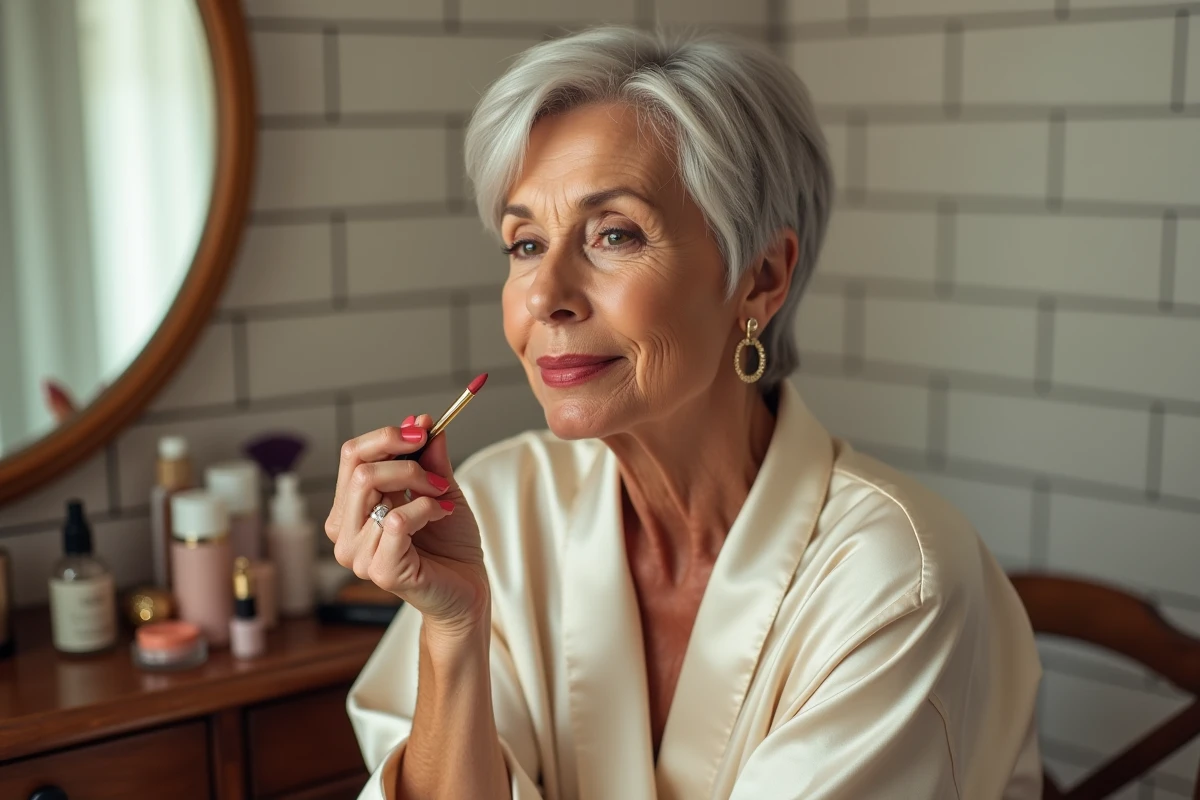
The texture of a lipstick matters more than its color when the skin around the mouth has lost dermal density. A creamy finish made from plant waxes and hyaluronic acid deposits the pigment without migrating into the fine lines around the mouth, whereas an ultra-matte finish accentuates every line. We recommend establishing this texture criterion before considering shade.
Texture and formulation: what affects wear on mature skin
Satin formulas offer a compromise between pigmentation and comfort. They typically contain emollient oils (jojoba, macadamia, rosehip) that maintain the flexibility of the colored film for several hours.
A so-called “long-wear” lipstick with a matte finish can work, provided it includes a moisturizing agent in its base. Without this, the pigment settles into the wrinkles instead of staying on the surface. We consistently observe this phenomenon with volatile solvent formulas lacking nutritional counterparts.
Finding the perfect lipstick after 60 involves testing the formula on the back of the hand, then checking after an hour to see if the pigment has settled into the skin folds. This simple test eliminates the majority of unsuitable products.
- Tinted balms are suitable for a natural result but lack staying power beyond two hours, requiring frequent touch-ups.
- Classic creamy lipsticks offer the best pigmentation/hydration ratio for lips that easily feel tight.
- Two-phase lip inks (fixing base + nourishing top coat) last long without drying out, but require precise application.
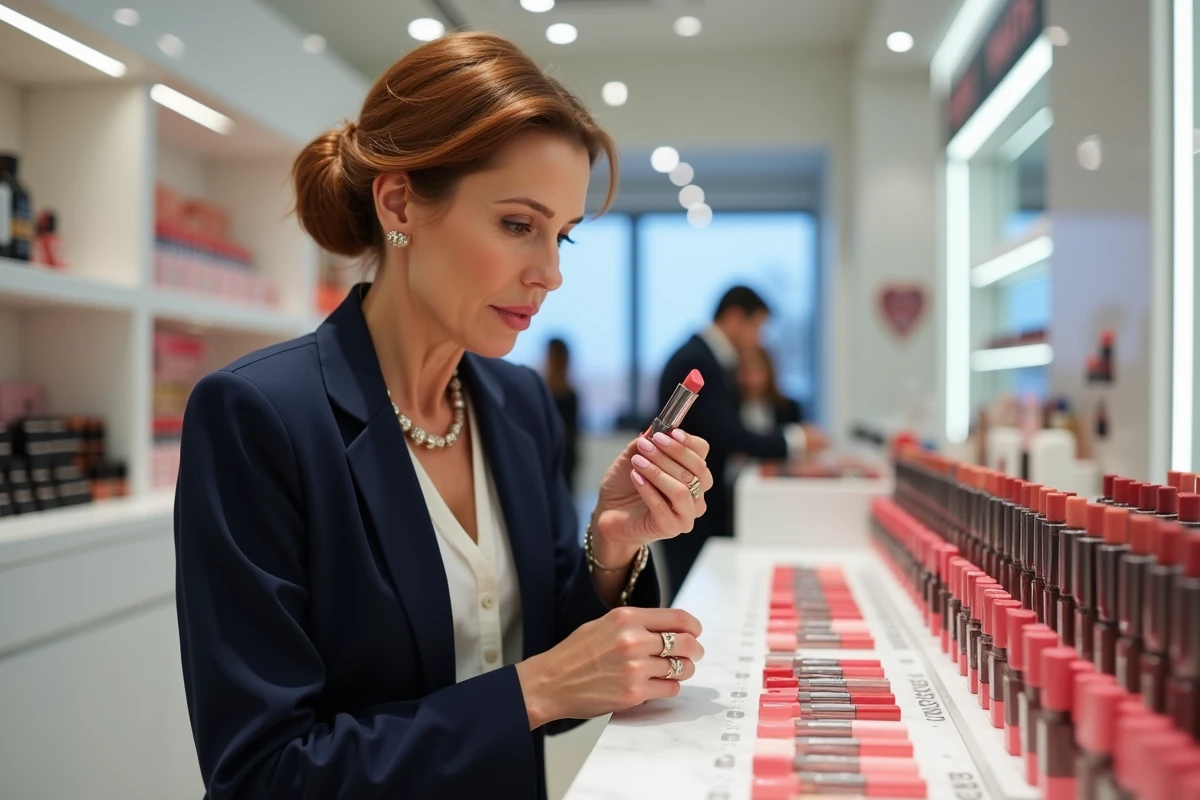
Choosing the right lipstick shade after 60
The rule of skin undertone remains the most reliable filter. A warm undertone (greenish wrist veins) calls for reds with orange or coral bases. A cool undertone (bluish veins) pairs well with raspberry pinks or bluish reds.
Too light nude shades age the face by erasing the natural relief of the lips. It’s better to opt for a rosy nude, slightly more pronounced than the natural lip color, rather than a washed-out beige.
Colors to favor and colors to avoid
Berry tones (blackberry, soft plum, raspberry) work remarkably well because they add brightness without overwhelming the face. They redirect light to the center of the face and create an immediate healthy glow effect.
Dark browns and very deep burgundies pose a problem: they absorb light and weigh down the mouth area. The result also depends on the residual pigmentation of the lips, which diminishes with age. The more discolored the lips are, the brighter the chosen shade must be to compensate for this loss of natural pigment.
Lip preparation and the role of lip liner
Makeup for the lips after 60 starts well before applying lipstick. A gentle scrub (fine sugar mixed with almond oil) removes dead skin that unevenly holds the pigment. A moisturizing balm applied ten minutes before makeup softens the surface.
The lip liner is the most underestimated product in the routine. Drawn just outside the natural lip line, it creates a physical barrier against pigment migration. We recommend a liner in the same color family as the lipstick, never darker by more than two shades.
Application technique to limit feathering
Apply a thin first layer with a brush, blot with a tissue, then apply a second layer. This layering method fixes the pigments in the lipstick material rather than on the surface, reducing transfer and feathering.
Some users apply a translucent loose powder through a tissue between the two layers. This old trick still works: the powder absorbs excess oil and sets the first layer without altering the color.

Daily lip care for better results
Lipstick cannot mask deeply dehydrated lips. Nighttime hydration with a rich balm (shea butter, vitamin E) prepares the ground for the next day. Lips lack sebaceous glands and lose their hydrolipidic film faster than the rest of the face.
Avoiding licking the lips remains a basic yet crucial piece of advice: saliva degrades the protective film and accelerates peeling. A balm with SPF also protects against UV damage that exacerbates lip collagen loss.
- In the evening, remove lipstick with a cleansing oil rather than a dry cotton pad, to avoid irritating the fragile skin around the mouth.
- Apply a night treatment containing hyaluronic acid or squalane directly on the lips.
- During the day, if the lips feel tight under lipstick, a layer of transparent balm on top revives comfort without altering the shade.
The choice of a suitable lipstick rests on three pillars: a moisturizing formula with a satin finish, a shade that matches the skin undertone, and careful preparation of the contour. The liner and the layering application technique do the rest. With these guidelines, the color lasts, does not feather, and the lips remain comfortable all day long.