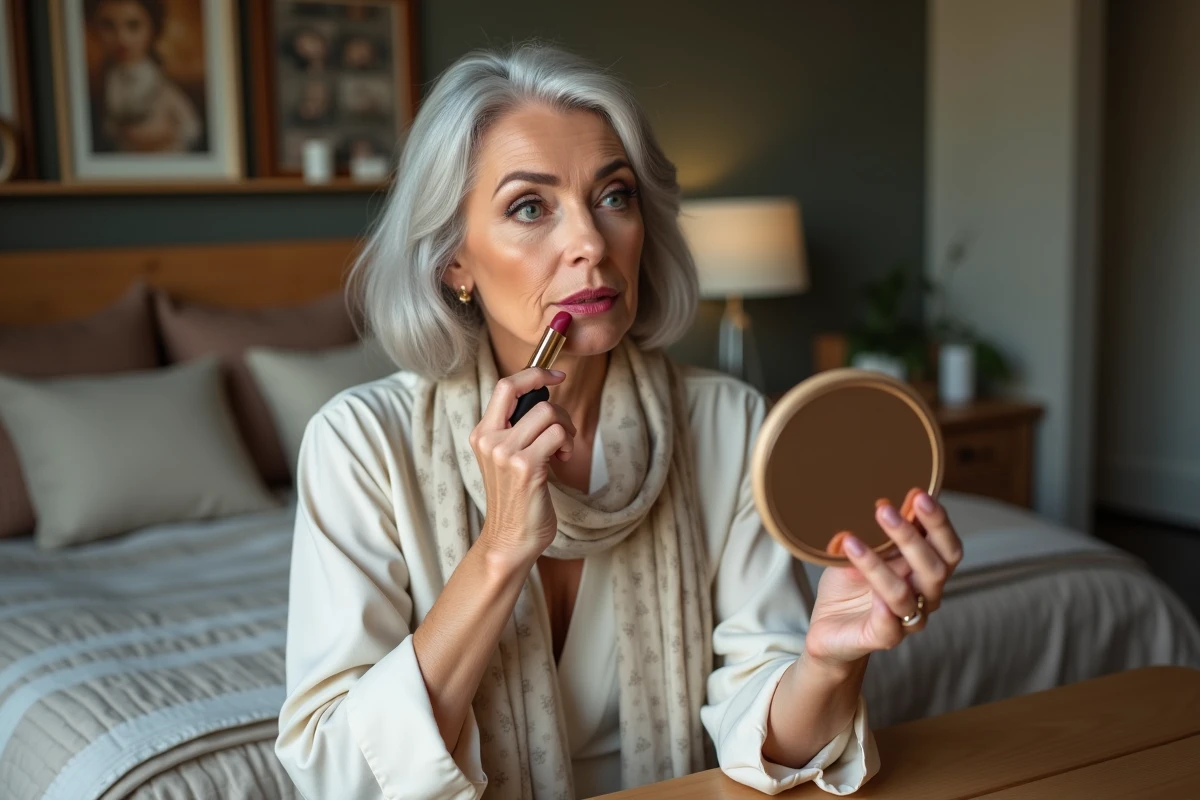
Daring to wear color after 60 is not trivial: a simple lipstick can add style or, conversely, dull an entire face. Dark shades can harden features, while overly light colors risk washing out a smile. After 60, the texture of the lipstick influences as much as the chosen shade: matte formulas accentuate fine lines, while satin finishes bring more softness.
An unsuitable color can highlight the signs of aging, while a subtle harmony enhances the complexion and brightens the face. The most common mistakes involve choosing the wrong undertones and a lack of knowledge about new formulas, which are specially designed for mature lips.
What time changes: understanding the evolution of lips after 60
Time marks the lips just as surely as it does the skin. By the sixties, volume diminishes, contours lose definition, and sometimes even become blurred. This is nothing exceptional: collagen production slows down, and firmness decreases. Around the mouth, fine lines appear and alter how color sits on the lip.
Dryness sets in more easily, sometimes leaving a feeling of tightness or discomfort. Hydration then becomes an essential step: applying a nourishing balm before makeup protects the smile and alleviates dryness. Those with mature skin know that a product enriched with emollient ingredients is an ally. It limits the plaster effect, adds flexibility, and prevents color from migrating into fine lines.
In light of these changes, a real question arises: how to enhance mature lips without disguising them? The choice of shade deserves reflection. Too dark, and the lack of volume is glaring; too light, and the mouth fades away. Each person seeks a tailored answer: what lipstick color after 60 will highlight the complexion, adapt to skin texture, and accompany changes in the face? Over time, the answers become clearer, informed by testing and listening to one’s own needs.
What colors and textures reveal your beauty at this age?
Finding the ideal shade after 60 is a delicate balancing act. Skin tone changes, and the light on the face evolves. Often, lipsticks that hit the mark are found among warm and bright shades. Opt for rosy tones, coral, rosewood: they enliven the complexion without hardening features. Fair skin glows with soft oranges or peach shades; those with deeper tones radiate with raspberry or light plum. Avoid the temptation of overly dark or very pale colors, which can dull and deepen expression.
Texture also matters as much as color. Creamy or satin formulas offer comfort and hydration, visually softening fine lines. In contrast, matte lipsticks tend to emphasize the lips and highlight the dryness characteristic of mature skin. Choose semi-matte or glossy textures that capture light, add volume, and instantly rejuvenate the smile.
Here are some key points to remember when choosing:
- Suitable shade: luminous pink, rosewood, warm coral, soft plum
- Texture: creamy, satin, semi-matte
- Hydration: prioritize lipsticks enriched with nourishing agents
Choosing a beautiful lipstick color connects elegance and kindness towards oneself. After 60, the right lipstick highlights personality, reveals experience, and enhances the unique beauty of each woman.
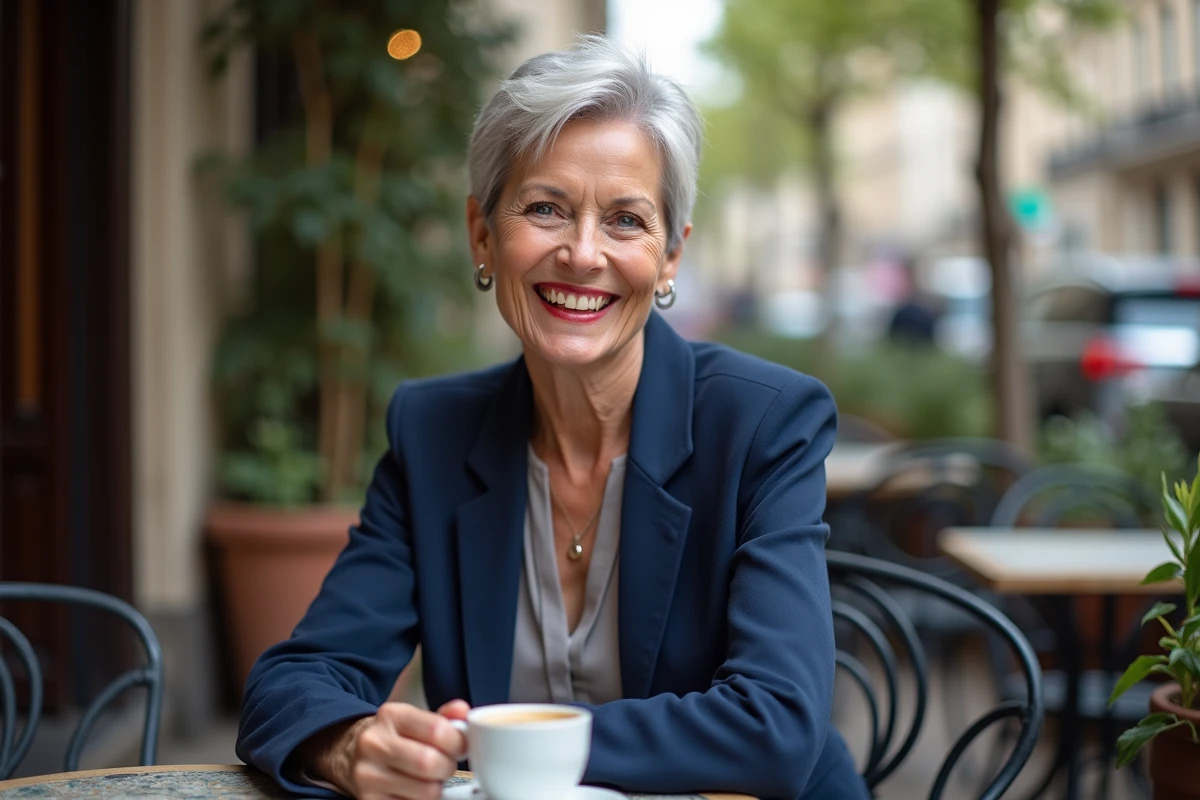
Common mistakes and tips to enhance your smile without missteps
Some pitfalls often arise when searching for the ideal lipstick after 60. Many succumb to the temptation of dark colors: they darken the face and emphasize a weakened lip contour. Matte textures, on the other hand, tend to highlight fine lines, whereas a creamy finish hydrates and softens.
Another common trap: rushing the application of lip liner. A liner that is too dry, too harsh, or mismatched with the color, and the entire expression becomes stiff. Prefer a soft liner, in a shade close to your lipstick, that outlines the contour without rigidity. This gesture structures the mouth and slows down the migration of makeup into the small lines around the lips.
Neglecting preparatory care also explains many disappointments. On dry lips, color does not adhere, and the result darkens. Always applying a hydrating base before makeup helps avoid this inconvenience.
The overall balance of the face is often overlooked. A barely worked complexion or a bare eye can make lipstick appear to float. For a harmonious effect, care for the complexion, shape the eyebrows, and add a touch of light to the inner corner of the eye. This way, the smile fits into a coherent whole, and all the light shines through.
To avoid missteps, keep these tips in mind:
- Lip liner suitable for outlining and fixing
- Hydrating base: an essential condition
- Worked complexion to enhance the smile
Ultimately, every smile carries the mark of lived experience and the present. Choosing your color, your texture, is to draw the most vibrant reflection of oneself, at every age, a new promise to celebrate in the mirror.