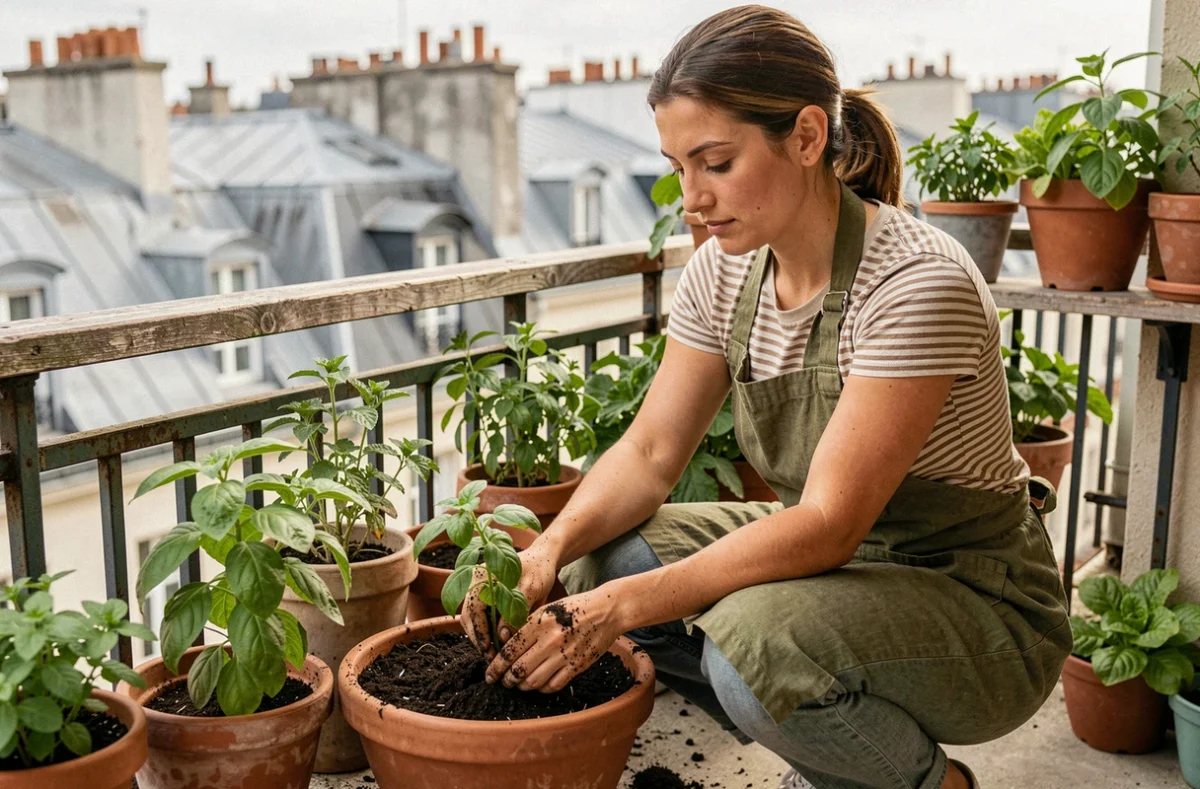
A south-facing balcony in Marseille and a recessed balcony between two buildings in Lille do not pose the same problems at all. Before choosing seeds or pots, one must deal with the heat reflected by the walls, the wind channeled between the facades, and sometimes reduced sunlight to just a few hours a day. Urban organic gardening starts with a careful reading of these constraints, not with a plant catalog.
Urban heat and water stress on a potted balcony
In the city, mineral surfaces (concrete, plaster, metal railings) store heat and release it to the pots placed against them. The result: the potting soil dries out much faster than in open ground, sometimes within a few hours during heat peaks.
One can approach urban organic gardening differently than with a watering can every three hours. Mulching the surface of the potting soil significantly limits evaporation, even in a small pot. Untreated wood chips, straw, or fallen leaves collected from a park do the trick. The thickness of the mulch matters more than its nature.
Another reflex: keep the containers away from the sun-exposed wall, even by a few centimeters. A pot pressed against a south-facing wall receives heat from both the sun and the wall. Pulling it away creates an air pocket that reduces substrate overheating. To delve deeper into this topic, urban organic gardening on Jardinage Bio details practices suited to small French spaces.
When the balcony only receives sunlight in the morning, the constraint reverses: there is a lack of light and warmth. In this case, it is better to give up on tomatoes and focus on leafy vegetables (lettuces, arugula, spinach), which tolerate partial shade and consume less water.
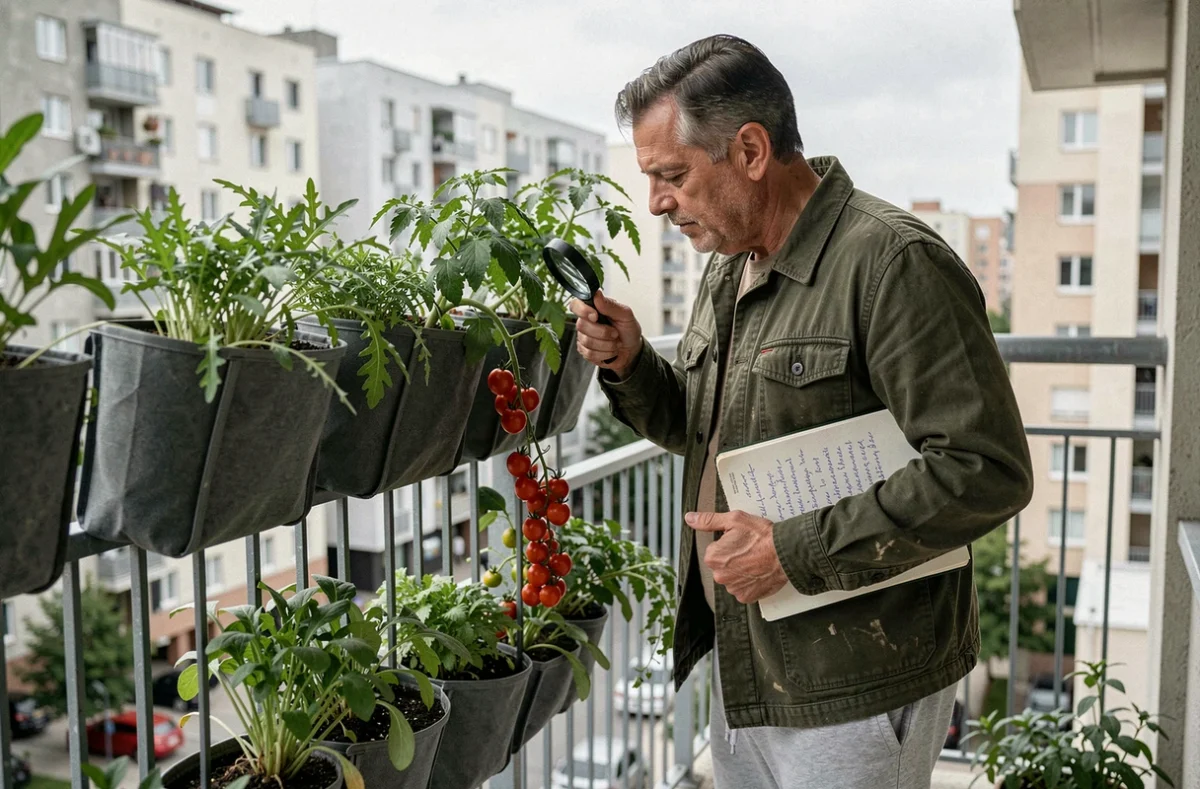
Organic substrate for balcony vegetable gardens: what changes compared to open ground
In open ground, the soil is alive: earthworms, fungi, and bacteria continuously decompose organic matter. In a pot on a balcony, this microbial life is reduced. The potting soil depletes in one season if not renewed.
For an organic vegetable garden, choose a potting soil labeled for use in organic farming, already enriched with compost. Low-quality universal potting soils often contain peat (a non-renewable resource) and little active organic matter. Reading the composition on the bag takes thirty seconds and avoids a substrate that compacts and retains water poorly after two months.
Nourishing the potting soil without chemical fertilizers
A compact worm composter, placed in a corner of the balcony or in the kitchen, produces a liquid fertilizer (worm compost tea) and mature compost that can be used directly in the pots. This way, the soil is nourished with the week’s vegetable scraps.
When a worm composter is not feasible (odors, space, co-ownership), slow-release organic pellets provide nitrogen and potassium for several weeks. They are mixed into the potting soil at the time of spring repotting, then supplemented mid-season.
Organic vegetables suited for pots: favor short-cycle crops
It is said everywhere that you can grow anything on a balcony. In practice, some crops require a volume of soil and sunlight that most urban balconies cannot provide. Rather than aiming for a full production, it is better to select short-cycle species that yield concrete results in a few weeks.
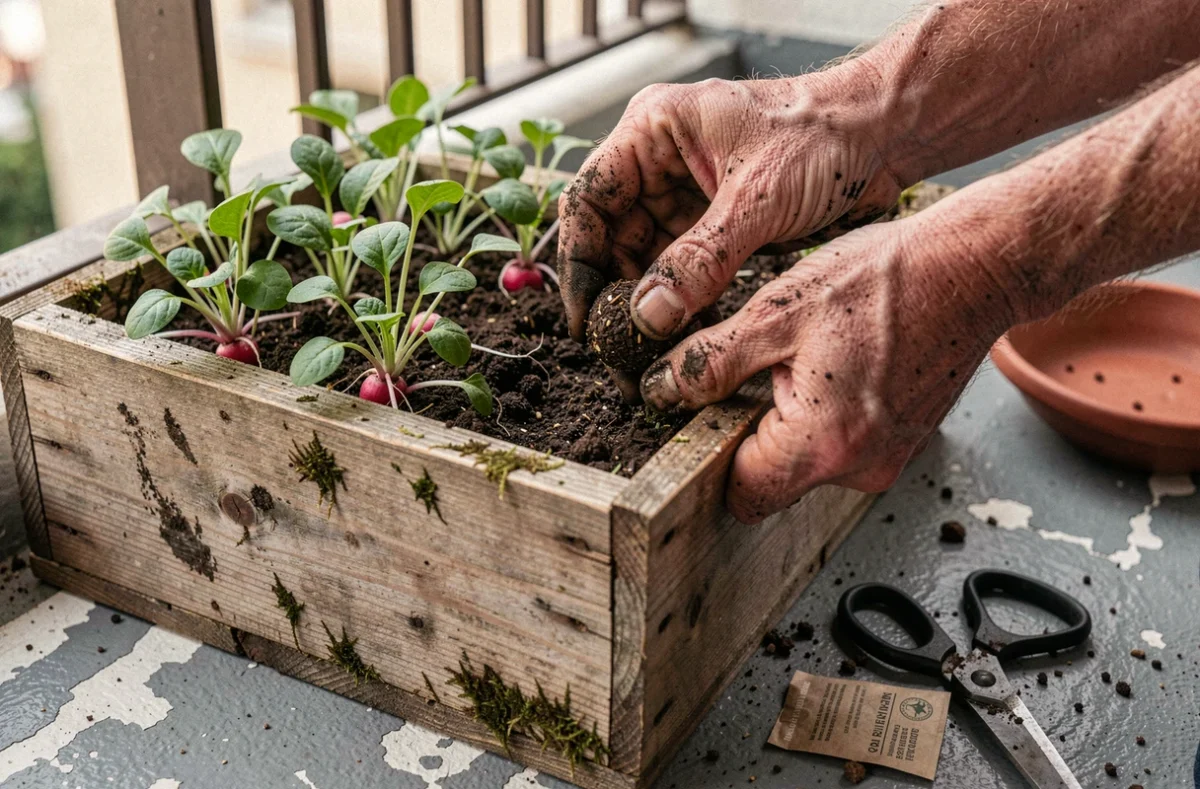
- Radishes germinate in a few days and are harvested in less than a month. They occupy little depth and tolerate partial shade.
- Cutting lettuces (like mesclun) allow for multiple harvests from the same plant. The leaves are cut as needed, and they regrow.
- Basil and chives grow easily in small pots. Organic herbs require less soil and less sunlight than fruiting vegetables.
- Cherry tomatoes are still possible, but only on a balcony receiving at least five to six hours of direct sunlight and in a deep container.
Canadian public health recommendations specify that fruiting vegetables (tomatoes, peppers) pose less risk of lead accumulation than leafy vegetables or roots. On a balcony cultivated in new substrate, this risk is limited, but careful washing of each harvest remains a reflex to keep.
Weight and regulations in co-ownership: check before installing
One rarely thinks about it when buying the first containers, but a container filled with moist potting soil weighs much more than expected. A large rectangular planter can weigh several dozen kilos once watered. Multiplied by four or five containers, the load becomes significant.
The co-ownership regulations may limit installations on balconies, prohibit water runoff to lower floors, or impose aesthetic constraints. Consulting the property manager or the regulations before fixing anything to the railing avoids unnecessary neighbor disputes.
Distributing the load rather than concentrating it
Placing the heaviest containers along the load-bearing wall (facing the facade) rather than at the edge of the balcony reduces structural stress. One can also replace part of the potting soil with lightweight drainage at the bottom of the container (expanded clay balls, perlite) to lighten the overall weight without sacrificing useful root volume.
- Bottom of the container: a drainage layer representing about a quarter of the total height.
- Middle and top: organic potting soil mixed with perlite to maintain an aerated substrate.
- Surface: mulch to limit evaporation and protect the microbial life of the potting soil.
Weight distribution, choosing an appropriate substrate, and respecting the co-ownership framework form the foundation of a sustainable balcony vegetable garden. Without these bases laid from the start, the best organic seeds will not yield much.