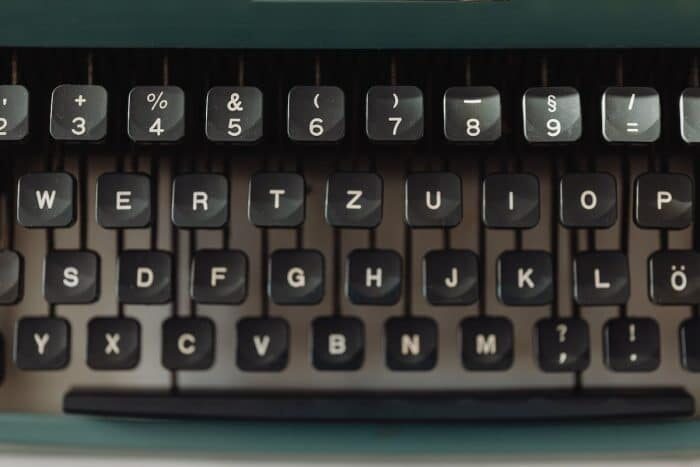
The layout of the keys on a Qwerty keyboard is a puzzle for some, a mystery for others. Why are the letters not arranged in alphabetical order? Why is the letter ‘Q’ the first on the keyboard? Over the years, this layout has proven its effectiveness, but it also has a fascinating and complex past. It is a daily dance of fingers on the keys, a ballet of letters and words that are typed at a dizzying speed. It is the story of our interaction with technology, from typewriters to our computer keyboards today.
The Qwerty Keyboard: A Fascinating History
The fascinating history of the Qwerty keyboard would not be complete without mentioning the M key on the keyboard. This key, curiously placed next to the letter ‘N’, seems at first glance to defy all logic in this chaotic arrangement of letters. However, by probing into the historical depths of the development of typewriters, one can find an explanation.
Christopher Sholes, the inventor of the typewriter and the father of the Qwerty keyboard, had the primary goal of preventing the metal hammers striking the ink ribbon from jamming when a rapid succession of keys was pressed. His solution was simple: to spread the frequently used letters as far apart as possible in a standard English text.
The “M key on the keyboard” finds its importance here. Indeed, in the English language—as is often the case in French—the letter ‘M’ is rarely followed or preceded by a vowel, unlike other consonants. Therefore, placing the ‘M key on the keyboard’ near commonly used vowels would have increased the risks of mechanical jamming.
This explicit desire for optimization thus dictated the placement not only of the ‘M key on the keyboard’ but of all the other keys that make up our iconic Qwerty arrangement today.
Today, where these mechanical constraints no longer exist with our modern computers equipped with their sleek, ultra-fast, and silent digital systems, some question the relevance of maintaining this type of arrangement. The Dvorak Simplified Keyboard or the BÉPO for French speakers offer more rational and ergonomic alternatives.
But despite these criticisms, it is clear that Qwerty remains firmly entrenched in our modern usage.
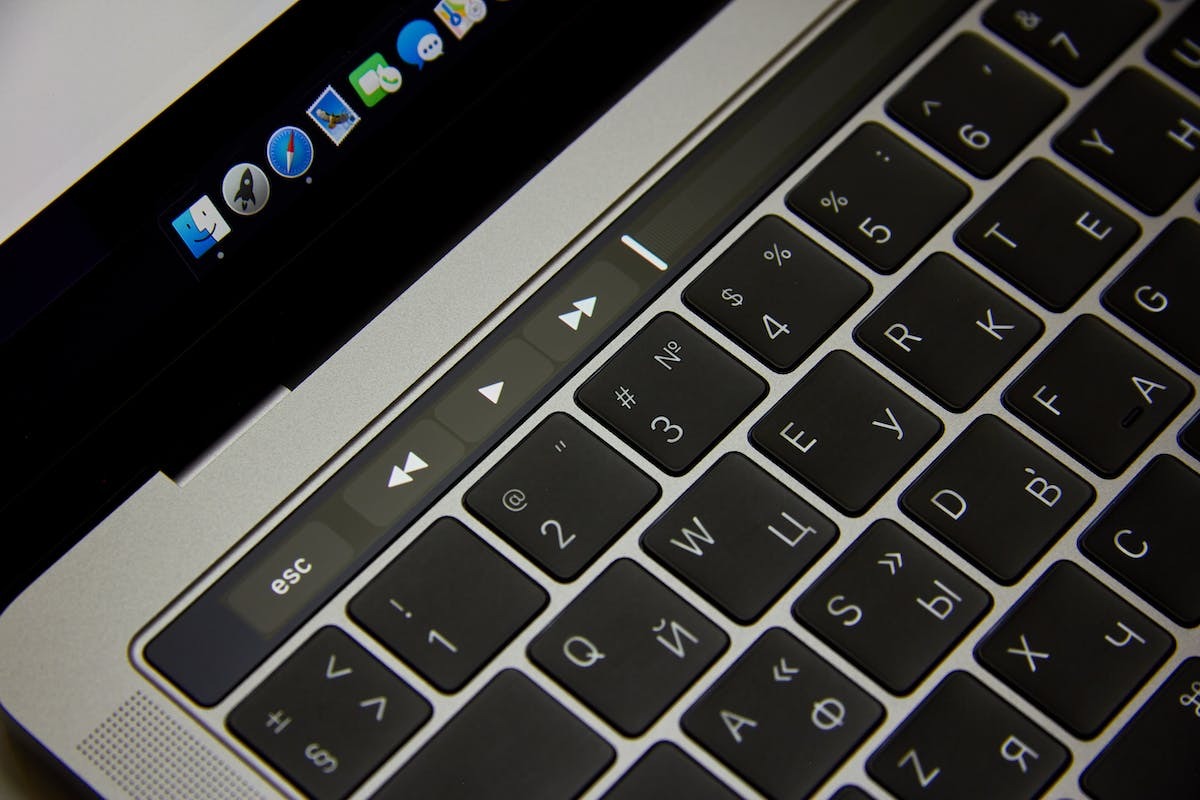
The Layout of the Qwerty Keyboard: What Are the Reasons
The layout of the letters on a Qwerty keyboard may seem strange at first glance, but it was designed for a specific purpose. One of the reasons for this layout is related to the frequency of letter usage in the English language. Indeed, the Qwerty keyboard was developed for typewriters in the 19th century, where typing speed was essential.
The inventor of the Qwerty keyboard, Christopher Sholes, was looking for a solution to avoid mechanical jams caused by rapid and repetitive typing. To do this, he dispersed the most commonly used letters to reduce the risks of the metal hammers getting stuck.
There is a certain logic in the arrangement of the keys. The vowels are placed on the top row (aeiou), followed by some commonly used consonants (r, t, s, n, l). This allowed professional typists to avoid their fingers overlapping when typing quickly.
Similarly, certain frequent combinations like ‘th’, ‘st’, or ‘er’ were separated to facilitate mechanical work and thus increase overall efficiency. This strategy also aimed to prevent the metal arms responsible for triggering the hammers from getting tangled with each other.
Qwerty: Advantages and Disadvantages of a Mythical Layout
The advantages of the Qwerty keyboard are numerous. Its layout has been adopted as an international standard, meaning that most people are already familiar with this arrangement. It is therefore easier to find a job or work in different countries where the Qwerty keyboard is used.
Thanks to its original design, the Qwerty keyboard allows for fast and fluid typing. The most commonly used keys are positioned ergonomically to minimize finger movements and thus reduce fatigue during long typing sessions.
Another advantage of the Qwerty keyboard is that it offers compatibility with a wide variety of software and applications. Most computer programs have been designed with this specific layout in mind, making it easier to use the keyboard in various digital contexts.
Despite its undeniable advantages, the Qwerty keyboard also has some disadvantages. One of the major issues lies in its low efficiency in terms of finger usage. Indeed, some very frequent letters such as ‘E’, ‘A’, or ‘O’ are positioned on different rows of the keyboard. This can slow down overall speed when one has to constantly move fingers between different rows.
Given that the Qwerty keyboard was developed nearly two centuries ago, it is not suited to modern technology and new typing habits. With the advent of smartphones and tablets, people are increasingly using their thumbs to type on a touchscreen. The Qwerty layout does not favor this new method of text entry.
The Qwerty keyboard has its advantages in terms of international recognition and efficiency for certain types of use. With the constant evolution of technology, it is possible that this layout may be replaced by alternatives better suited to current needs.
Alternatives to the Qwerty Keyboard: What Are the Options
Nowadays, many alternatives to the Qwerty keyboard have been developed to meet the specific needs of users. These alternatives aim to improve typing efficiency and to facilitate adaptation to new technologies.
One of the first alternatives that gained popularity is the Dvorak keyboard. Unlike the Qwerty keyboard, the Dvorak is designed to place the most commonly used letters on the top row, in order to avoid excessive finger movements between the different rows. This layout also takes into account the dominant hand of the user: the keys are distributed differently between the left and right hands for better efficiency.
Another interesting alternative is the Colemak keyboard. This layout builds on that of Qwerty, but with some key modifications. For example, it moves certain common keys such as ‘A’, ‘S’, ‘E’, and ‘T’ to a more accessible position based on their high frequency of use in the English language.
The BÉPO (for ‘bépoïde’) is also a popular alternative keyboard in France. It was specifically designed to optimize the use of written French through a layout based on several linguistic criteria such as letter frequency and their co-occurrences in our language.
With the advent of touch devices and virtual screens, new alternatives have also emerged. For example, virtual keyboards can be customized to adapt to each user’s typing habits. Some even offer a ‘split keyboard’ layout, where the keyboard is divided into two parts on the screen to facilitate two-handed input.
It should be noted that these alternatives are not necessarily better or worse than the Qwerty keyboard, but they simply offer different options suited to various contexts of use and individual preferences. The choice of an alternative layout will therefore depend on the specific needs of each user and the type of device used.
Although the Qwerty keyboard is widely used and popular worldwide, there are now several alternatives that allow for better efficiency in typing and easier adaptation to new technologies. Users now have a wide choice to find the layout that best suits their personal preferences and specific linguistic or technological needs.
Qwerty: Today’s Uses Decoded
The current uses of the Qwerty keyboard are varied and ubiquitous in our daily lives. Despite the emergence of many alternatives, the Qwerty keyboard retains a prominent place in the fields of office work, computer programming, and video games.
In the field of office work, the Qwerty keyboard is used by default on most computers. The keys are arranged to facilitate fast and efficient text entry in English. This layout has been adopted internationally, which explains its popularity even beyond English-speaking countries.
In terms of computer programming, the Qwerty keyboard offers a practical arrangement that allows coders to quickly access certain specific characters used frequently, such as quotation marks or parentheses.
The Qwerty Keyboard: What Future and What Evolutions to Expect
The Qwerty keyboard has managed to position itself as a reference in the field of text entry. Its popularity and widespread adoption testify to its effectiveness and relevance. Despite its undeniable advantages, voices are being raised to question its design.
Some argue that the key layout on the Qwerty keyboard, originally designed to prevent mechanical jams in typewriters, is no longer suited to current needs. They argue that other alternative layouts would allow for even faster and more ergonomic typing.
One of the proposed solutions is the Dvorak keyboard. This layout reorganizes the keys by placing the vowels in the center of the keyboard and the consonants around them. According to its advocates, this configuration would allow for better balance between the two hands during typing and thus reduce muscle fatigue.
There are also other alternative layouts such as Bépo, which has been specifically designed to optimize the use of French by taking into account the frequency of letter occurrence.
Despite these interesting proposals, it seems unlikely that the Qwerty keyboard will be massively replaced in the near future. Its widespread adoption would make any radical change difficult, requiring adaptation from users and manufacturers.
Ultimately, the Qwerty keyboard remains a solid standard in our digital society. Its layout has allowed for smooth and efficient typing for many years. However, it is important to continue listening to users and further improve the keyboard typing experience.