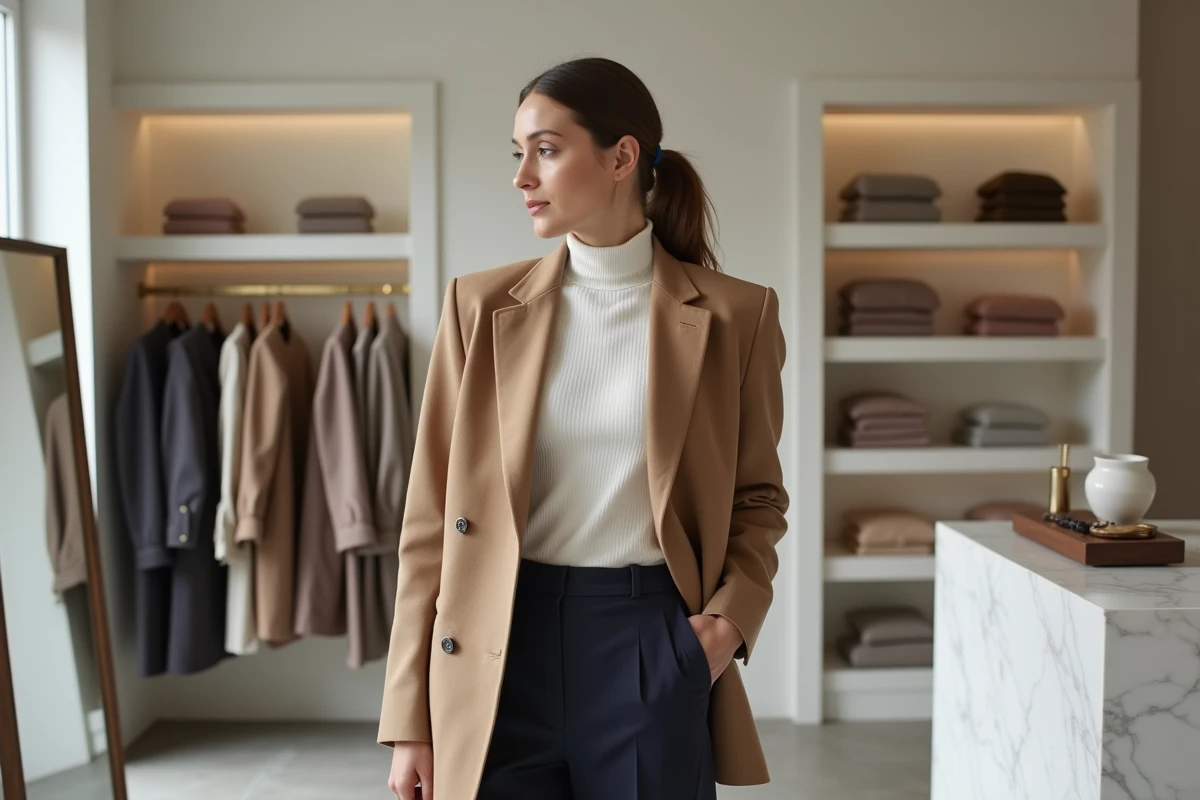
When you open Instagram or TikTok on a Monday morning, the feed is overflowing with looks, hauls, and fashion carousels. Spotting what will truly last in the spring-summer 2026 season requires sorting through the noise and the useful signals.
Decoding fashion trends: why educational formats are replacing hauls
The most followed fashion accounts in 2025 no longer focus on the quantity of items unboxed in stories. Trend decoding formats generate more engagement than simple hauls and OOTDs, especially in fashion, where the audience now expects an explanation rather than just an unboxing.
Accounts that explain why a cut works or how to pair two prints receive more interactions than those that merely show an opened package. We are seeing the emergence of “fashion curator” profiles on Substack and Discord: weekly newsletters, thematic discussion threads, mini-style courses in carousel format.
For those who want to go beyond passive scrolling, following fashion on La Star du Web allows for a mix of trend analysis and concrete selections, without getting lost in the flow of social media.
Community drops on Discord and Twitch: the new fashion ground
Instagram remains central, but fashion is also investing in other platforms. Since 2024, several brands have been organizing exclusive drops on Discord and Twitch, with pre-sales and promo codes reserved for members of these servers.
Launchmetrics, in its report “The State of Influencer Marketing 2025 – Fashion, Luxury & Beauty,” notes that fashion and luxury are among the sectors where these live-community formats are progressing the fastest, particularly to capture Gen Z.
What changes compared to a classic Instagram post:
- The drop is time-limited, often announced a few hours before the live, creating a reflex for active monitoring rather than passive scrolling
- Styling is done live, with audience questions and commented try-ons, a format much more engaging than a retouched photo
- Discord communities allow for discussions among members after the live, to resell or exchange pieces, which extends the lifespan of each drop
Feedback varies on this point: some find these drops too promo-oriented, while others see them as a real advisory space. The filter to apply remains the same as on Instagram, checking if the creator actually wears what they recommend.
Spring-summer 2026 trends: the pieces that really hold the season
Rather than listing twenty micro-trends half of which will disappear by July, let’s focus on what is reappearing in the runway shows and on the most followed fashion accounts this season.
The structured midi skirt
We see it everywhere, from street looks to more dressed-up silhouettes. What makes the difference this season is the material: skirts in rigid poplin or thick linen replace the fluid versions of previous summers. Worn with flat sandals or sneakers, it works from the office to happy hour without changing outfits.
The oversized shirt dress
Another piece that is settling in for the long haul: the very loose shirt dress, belted or not. It adopts the workwear code that dominates the spring 2026 collections. Its practical advantage is that it can be worn open over pants on windy days without losing coherence in the look.
The return of saturated colors
Neutral tones are not disappearing, but the most shared looks on Instagram this season focus on combinations of bright colors. Bright red, emerald green, and mustard yellow are making a strong comeback, often in color blocks rather than prints.
Sponsored fashion content: the European rules that change the game
The new European transparency obligations regarding sponsored content are significantly altering what we see in our news feed.
Since the gradual implementation of the Digital Services Act (DSA), platforms must make commercial partnerships more visible. For us, as readers, this means that a post tagged “commercial collaboration” at the top of the screen does not hold the same value as a spontaneous review.
What we can take away from this:
- Systematically check the partnership mention before considering a review as unbiased
- Favor creators who clearly separate their sponsored content from their personal recommendations
- Accounts that publish “anti-hauls” (what they do not recommend buying) are often more reliable than those that only show favorites
This forced transparency also pushes fashion influencers to take better care of their partnerships. A poorly targeted contract is immediately noticeable when the mention “sponsored” is displayed prominently.
Following fashion trends in 2026 is no longer just about copying a look spotted on Instagram. Formats are evolving, platforms are diversifying, and regulations are making the landscape clearer for those who take the time to look beyond the surface. The most useful reflex remains to choose a few reliable sources, to understand why a piece works rather than buying it just because it looks good in photos.