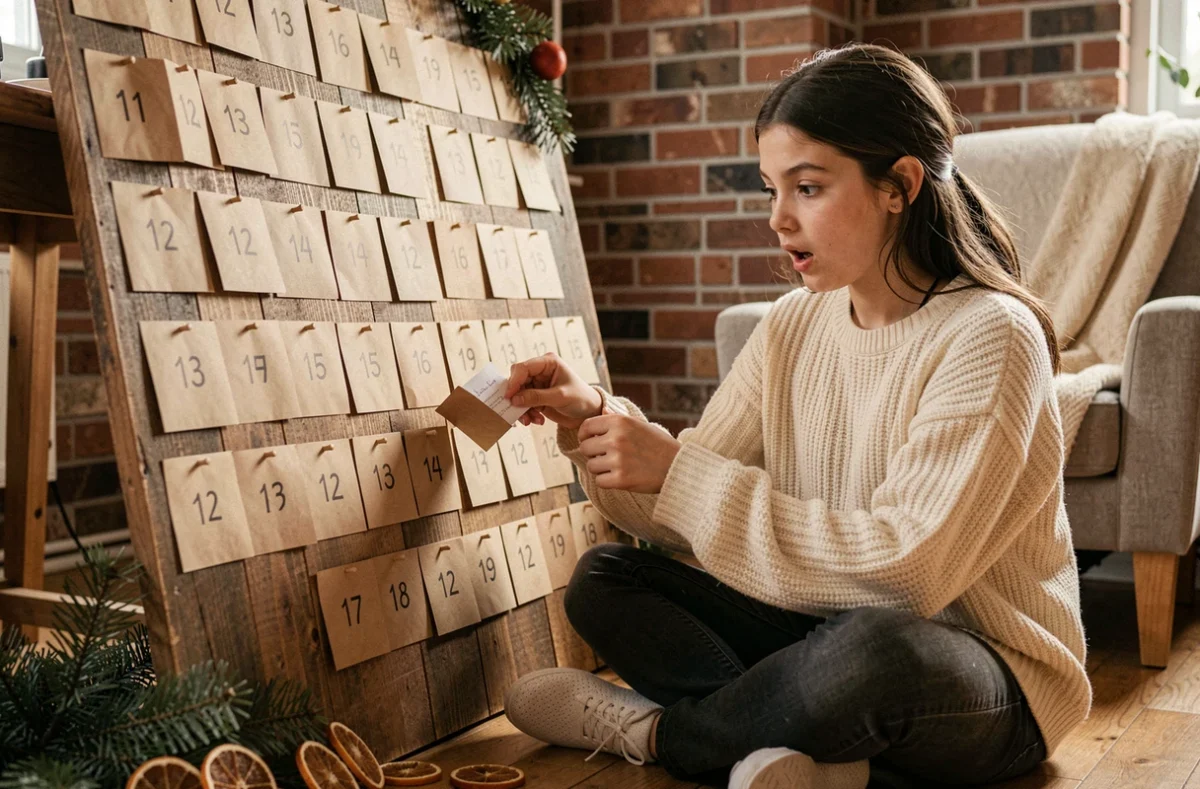
The market for Advent calendars for teens has expanded considerably in recent years, with options ranging from beauty products and games to treats and escape-room experiences. There’s no shortage of choice, but most calendars follow the same formula: 24 small items to unwrap and forget about as soon as January arrives.
France’s Environment and Energy Management Agency (ADEME) recommends choosing durable, digital or second-hand gifts to limit the buildup of items that are quickly discarded. For an Advent calendar for a teen, this approach changes how you put it together: fewer boxes filled just for the sake of it, and more carefully chosen surprises.
Advent calendars for teens: the trap of filling every box
Filling 24 boxes inevitably leads to buying low-value items to stay within budget. Keychains, mini erasers and plastic gadgets often end up at the back of a drawer. The problem isn’t the number of boxes, but the feeling that every one has to contain a physical item.
A practical alternative is to alternate between objects and experiences. Over 24 days, around ten boxes could contain a voucher for an activity (a movie night, choosing dinner, an outing with a friend), a personalized message or a family challenge. The rest can hold material surprises, chosen for their real usefulness in a teen’s everyday life.
This mix avoids clutter while preserving the daily element of surprise. For more inspiration, these gift ideas for a teen’s Advent calendar offer ways to mix things up with accessories, games and thoughtful little touches.
Useful surprises for teens: what lasts beyond December
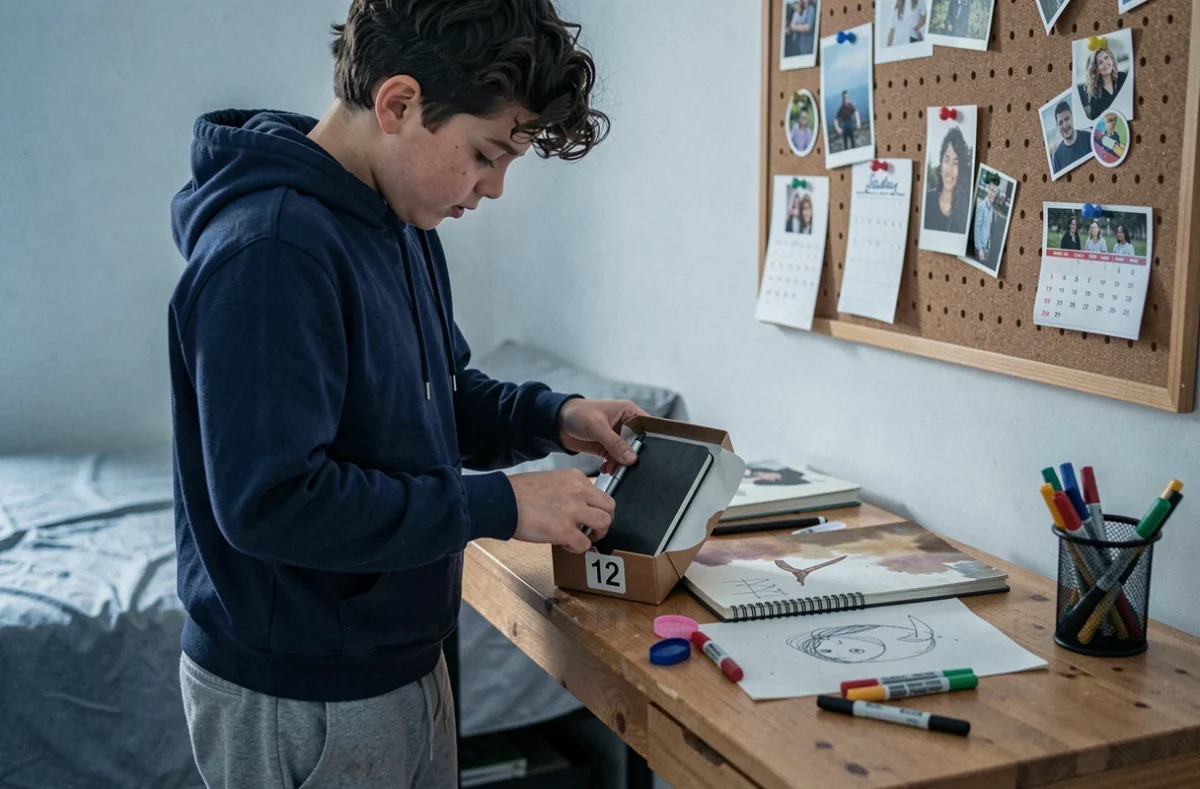
A successful Advent calendar for a teen is one whose contents are still being used after the holidays. The categories that stand the test of time vary from one teen to another, but a few are popular choices.
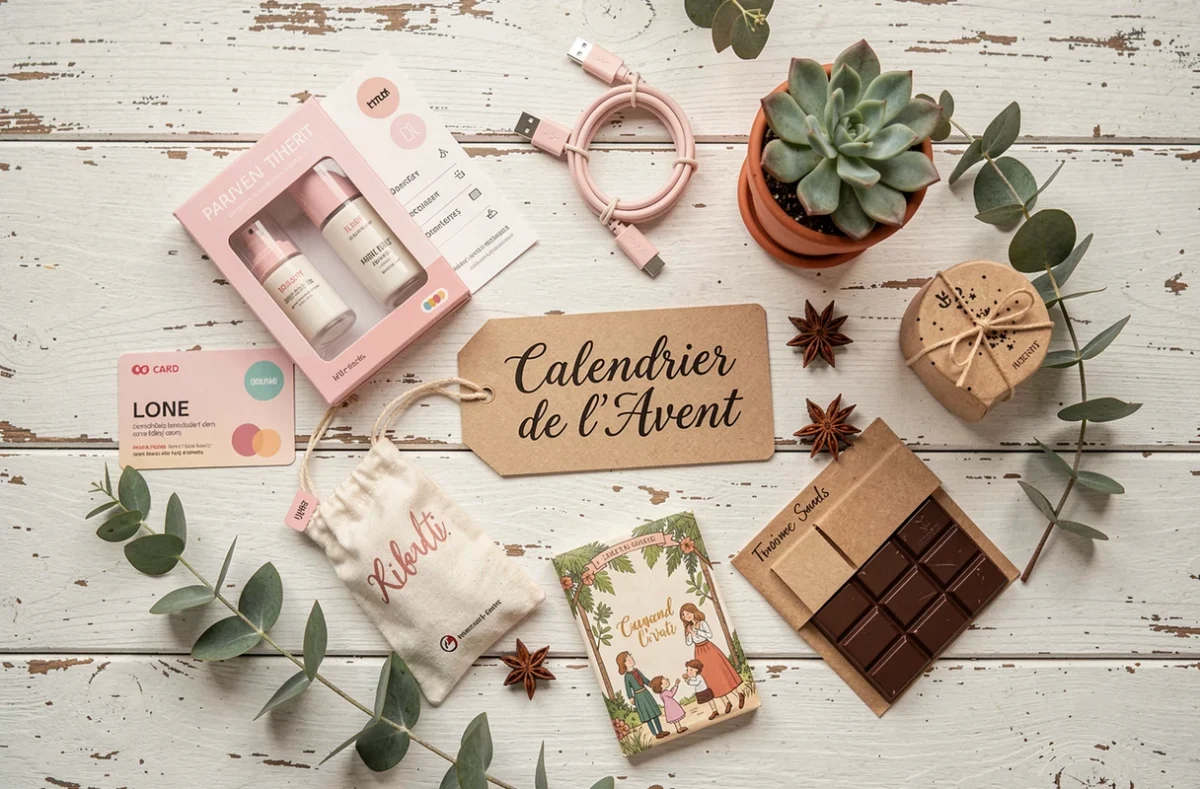
- Everyday accessories: patterned socks, hair ties, a charging cable or a pocket-sized notebook. These are items teens actually use and often need to replace.
- Skincare suited to teenage skin: a gentle cleanser, lip balm or moisturizer. For beauty calendars, Que Choisir notes that allergen labeling thresholds are lower for leave-on products. Checking the ingredients is more reliable than relying on a brand’s reputation.
- Consumable products: tea or hot chocolate sachets, artisan candy or a small jar of chocolate spread. Nothing piles up; it all gets used.
- Digital gifts: a code to rent a movie, a gift card for a music platform or temporary access to a gaming or drawing app.
The key is knowing the teen’s habits. A personalized calendar built around three or four of their interests is better than a generic assortment of 24 different products.
Reusable containers: an often-overlooked feature of teen Advent calendars
Most store-bought Advent calendars are designed for single use. Cardboard, molded plastic and aluminum are often combined in the same package, making them harder to sort for recycling. Separating each material before throwing it away isn’t always an obvious step, and a “recyclable” container isn’t necessarily sorted correctly.
Choosing a refillable calendar (fabric pouches, wooden boxes or reusable kraft paper bags) solves the problem at its source. The container can be kept from one year to the next, with only the contents changing. This approach supports the reuse goals set out in French regulations, which encourage packaging manufacturers to adopt more sustainable solutions.
Make the container with your teen
A homemade calendar doesn’t have to be elaborate. Twenty-four numbered kraft envelopes hung on a string of lights are all you need. An envelope can hold a small item, a note, a voucher or a homemade scratch-off card.
One advantage of this approach is that your teen can help make a calendar for a sibling or parent, turning it into a family project rather than just another purchase. The container can be stored flat and brought out again the following year.
Put together a teen Advent calendar without accumulating 24 objects
The real challenge isn’t finding 24 surprises; it’s deciding how many of them should be physical items. A good balance is around a dozen useful objects and a dozen experiences or digital gifts. “Experience” boxes often cost less and make a bigger impression.
Plan the calendar in three steps
- List your teen’s interests (video games, sports, reading, beauty, cooking) and choose two or three related categories of items.
- Set aside six to eight “non-material” boxes for activity vouchers, messages, challenges or digital codes. Spread them throughout the month to keep things varied.
- Save two or three boxes for more expensive surprises (a book, a tech accessory or an item of clothing) and place them on weekends, when your teen has time to enjoy them.
This method helps you stay within budget while keeping the element of surprise alive every day. Instead of a batch of identical mini gifts, the calendar becomes a thoughtful selection made for the person opening it.
An Advent calendar for a teen doesn’t need 24 wrapped products to work. A reusable container, surprises suited to the teenager’s actual tastes and a few shared family experiences make the countdown to Christmas more memorable than yet another standardized assortment.